
No, not talking rugby or football or anything like that. We’re talking golf. Um, duh’, Dan.
Over the years I have been privileged to have seen some great golfers and seen and talked to some great coaching professionals. The old saying goes, ” if you have 12 teaching pros in a room there will be 13 different opinions on how the swing works.” I suppose that’s true but each coaching pro/teaching pro/club pro has their own preferences and likes and I think we (as coaches) can learn from each of them.
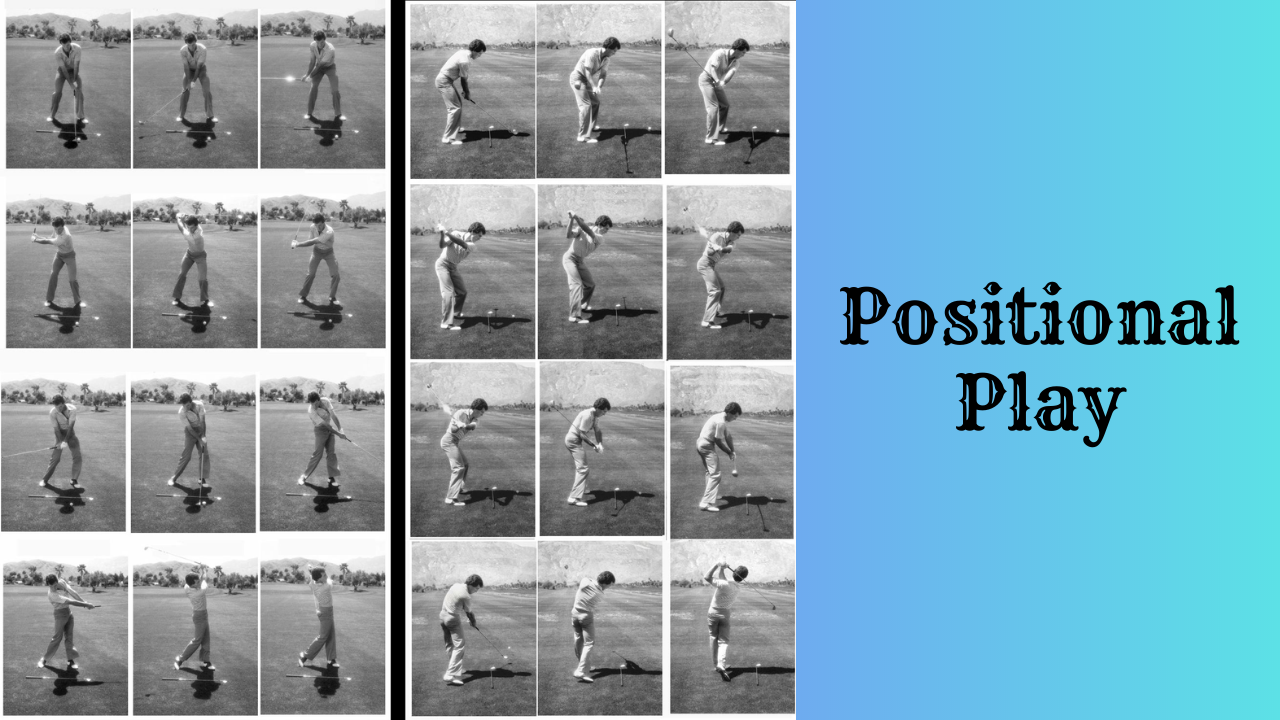
On of the ‘systems’ that has been a round a while was the positions of a golf swing. Highlighted by Mac O’Grady and his MORAD 10 positions and closer to home by Mal Tongue and his 9 Lines theory. The basic premise is to have a series of checkpoints to see if the swing is in order, both sequentially and from a correctness standpoint. What correctness is, I don’t know. I saw a guy on Instagram the other day pounding a ball with just one hand.
For me, the swing I like to promote is one of dynamic movement. Having a positional approach seems to stall things by getting hung up on where one ‘needs’ to be. I would much rather the player worked on a dynamic move sequentially than certain positions.
However, the positions are a marvelous check for us pros to see how the swing looks in a comparative sense. Like I say, there are so many things you can learn from other pros that can be used in your own coaching which is then passed on to you guys, the players.
That’s just my 2 bob’s worth. Nothing too serious but it gives you an insight into what my coaching sessions are focused on and what they may not.


Leave a Reply